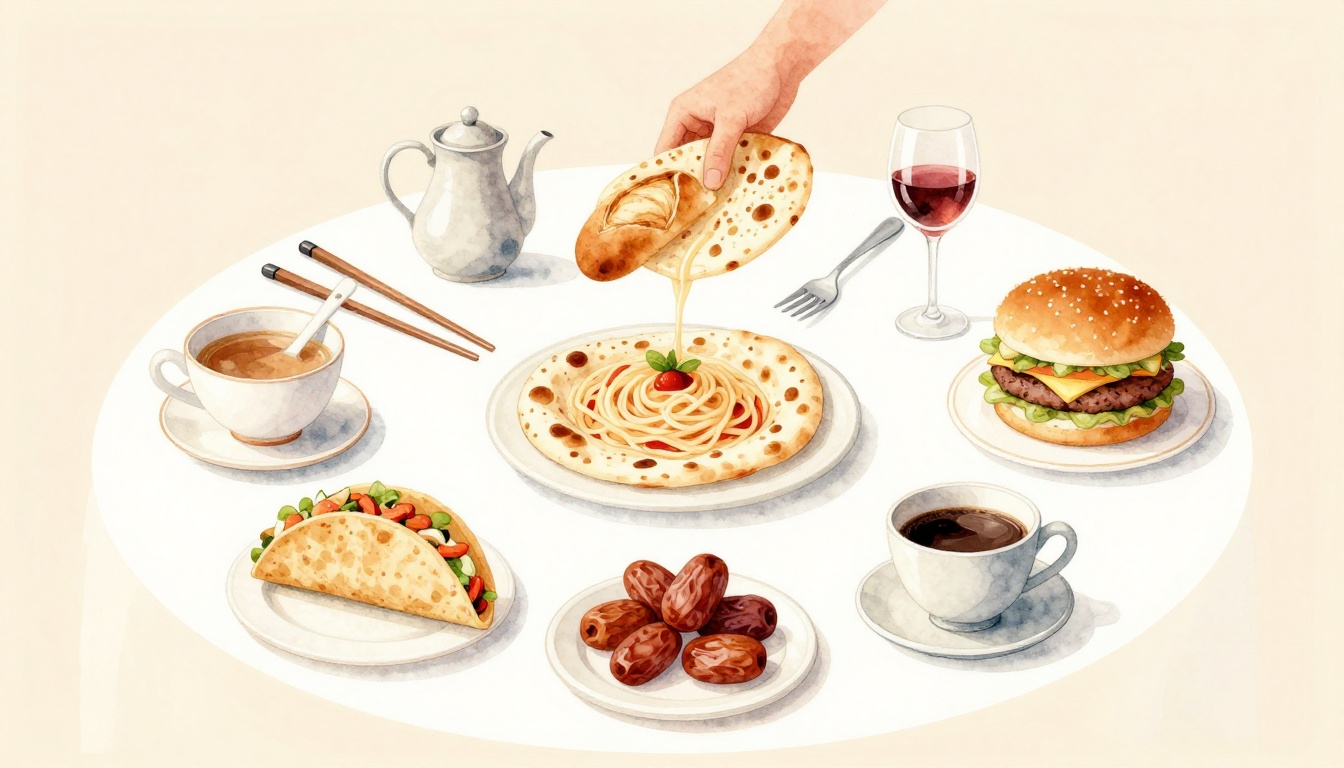
Picture this. You’re at a dinner in Tokyo. Excited, you stick your chopsticks straight into a bowl of rice. Everyone freezes. That simple move mimics funeral incense. Ouch. Awkward moments like these happen to travelers everywhere.
Table manners matter because they show respect. They help you blend in and avoid offense. In a world full of diverse cultures, knowing local customs turns meals into highlights of your trip. No one wants to be the guest who slurps too loud or uses the wrong hand.
This guide covers key habits in Japan, China, India, France, Italy, the UK, USA, Mexico, Brazil, Ethiopia, and Saudi Arabia. These traditions stay steady as of 2026. You’ll pick up easy dos and don’ts. Soon, you’ll dine like a local. Let’s start with Asia’s unique styles.
Asian Dining Secrets: From Japanese Slurps to Indian Right Hands
Asia mixes chopsticks, hands, and shared plates. Respect for elders and hosts drives most rules. Families often eat together from communal dishes. These habits build harmony at the table.
Japan: Slurp Noodles Loudly and Wait for the Eldest
Wait for the oldest person to start eating. That’s a sign of respect. Hold chopsticks properly. Never rub them together; it suggests poor quality. Pointing them at someone looks rude too.
Slurp your noodles loud. It shows you enjoy the food. Before the meal, say “itadakimasu” to give thanks. After, say “gochisousama deshita” for appreciation. These phrases warm hearts.
Don’t stick chopsticks upright in rice. It recalls funerals. Passing food chopstick to chopstick mimics bones at ceremonies. Skip tipping servers; they see it as insulting.
Imagine a family sushi meal. You wait, slurp ramen, and use words right. Locals smile. For more on these rules, check Japan’s etiquette guide for travelers.
China: Burp to Say Thanks and Serve Others First
Serve elders or hosts before yourself. Use your chopsticks to share from big platters. Turn the lazy Susan gently. A soft burp signals thanks for the meal.
Take small bites. Let others choose first from communal dishes. At banquets, stand for toasts. Keep noise low except for that polite burp.
Avoid taking the last bit from shared plates. It pressures the host. Don’t point chopsticks at people. Finish most food at a host’s home, but leave a little to show abundance.
Picture a lively banquet. Steaming dumplings spin around. You serve grandma first. She nods approval. Resources like Chinese dining etiquette basics offer extra tips.
India: Right Hand Only for Curries and Breads
Use only your right hand for eating. The left one stays for hygiene tasks. Wash both hands before and after meals. Form rice into balls with fingers.
Scoop curries onto breads like naan or roti. Accept seconds with a smile. It honors the cook. Eat slowly to savor spices.
Never touch food with your left hand. Licking fingers happens, but do it discreetly. At a thali spread, mix dal and veggies right-handed. Guests feel welcome when you follow suit.
European Table Grace: French Wrists Up and Italian Pasta Twirls
Europe loves long, chatty meals. Formal silverware styles rule. Meals bond people. France, Italy, and the UK each add flair.
France: Keep Hands on the Table Edge During Chatty Meals
Rest wrists on the table edge. Keep hands visible; it builds trust. Use Continental style: fork in left hand, knife in right. Switch only for bread.
Talk a lot. Savor courses with wine. Cut one bite at a time.
Elbows off the table. Don’t rush or ask for leftovers. Doggy bags seem cheap. In a cozy bistro, chat flows over escargot. Hands stay in view. See French table manners essentials for details.
Italy: Twirl Pasta and Skip Cheese on Seafood
Twirl spaghetti on your fork against a spoon. Never cut it. Chat lively during family dinners. Sip cappuccino early; espresso ends the meal.
Add cheese to most pastas, but not seafood ones. It clashes flavors. Pass bread for sauce sopping.
Don’t request Parmesan on everything. In a trattoria, twirl linguine. Relatives laugh and share stories. That no-cheese rule keeps purists happy.
UK: Pinky Down with Tea and Pass to the Right
Hold tea cups with pinky down. Pass items to the right. Use Continental fork-knife grip mostly.
Eat most foods with utensils, even veggies. Napkins go on your lap.
Skip elbows on the table. Don’t talk with food in your mouth. At afternoon tea, scones come first. Pub grub waits for forks. These steps fit right in.
Americas’ Casual Vibes: US Tips to Brazilian Shares
The Americas blend casual eats with family shares. Tipping varies. Meals relax friends and kin.
USA: Switch Your Fork and Tip Generously
Cut food, then switch fork to right hand. Tip 15 to 20 percent. Say “check please” softly.
Keep elbows off. Eat at a steady pace. No loud burps.
In a diner, flip that fork. Server smiles at the tip. Casual fits here.
Mexico: Wait for the Host and Try Every Dish
Host starts first. Sample all offered dishes. Use utensils mostly; hands work for tacos.
Arrive 15 minutes late. It’s polite. Try everything at fiestas.
Don’t leave food; it wastes hospitality. Lively tables buzz with tamales.
Brazil: Knife and Fork for Fruit, Chat All Night
Pass family-style dishes. Use knife and fork for everything, even mango slices. Talk long into the night.
Stay relaxed. Don’t rush. Share the last bites.
Beach barbecues hum with chatter. Utensils handle all.
Unique Customs in the Middle East and Africa: Hands and Hospitality
Right hands rule here. Hosts offer generously. Shared plates foster bonds.
Ethiopia: Scoop Stews with Injera Using Right Hand
Tear injera bread with right hand. Scoop wat stews from one big platter. Feed friends a bite.
Share everything. No waste.
Left hand stays away. Lick discreetly later. Groups laugh over spicy scoops.
Saudi Arabia: Right Hand Eats After Host’s Okay
Wait for host’s invite. Eat with right hand only; utensils rare. Leave some food to show plenty.
Refuse once or twice politely, then accept. Sit for majlis meals.
Don’t eat standing. Hospitality shines.
Table manners differ wildly. Asia slurps and shares. Europe chats with wrists up. Americas tip and pass. Middle East and Africa honor hands and hosts.
Adapt these to show respect. Trips get richer. Observe first. Ask nicely if unsure. Apps update minor shifts, but cores hold in 2026.
What’s your worst dining blunder abroad? Share in comments. Try one custom next meal. Bon appétit worldwide.
(Word count: 1492)