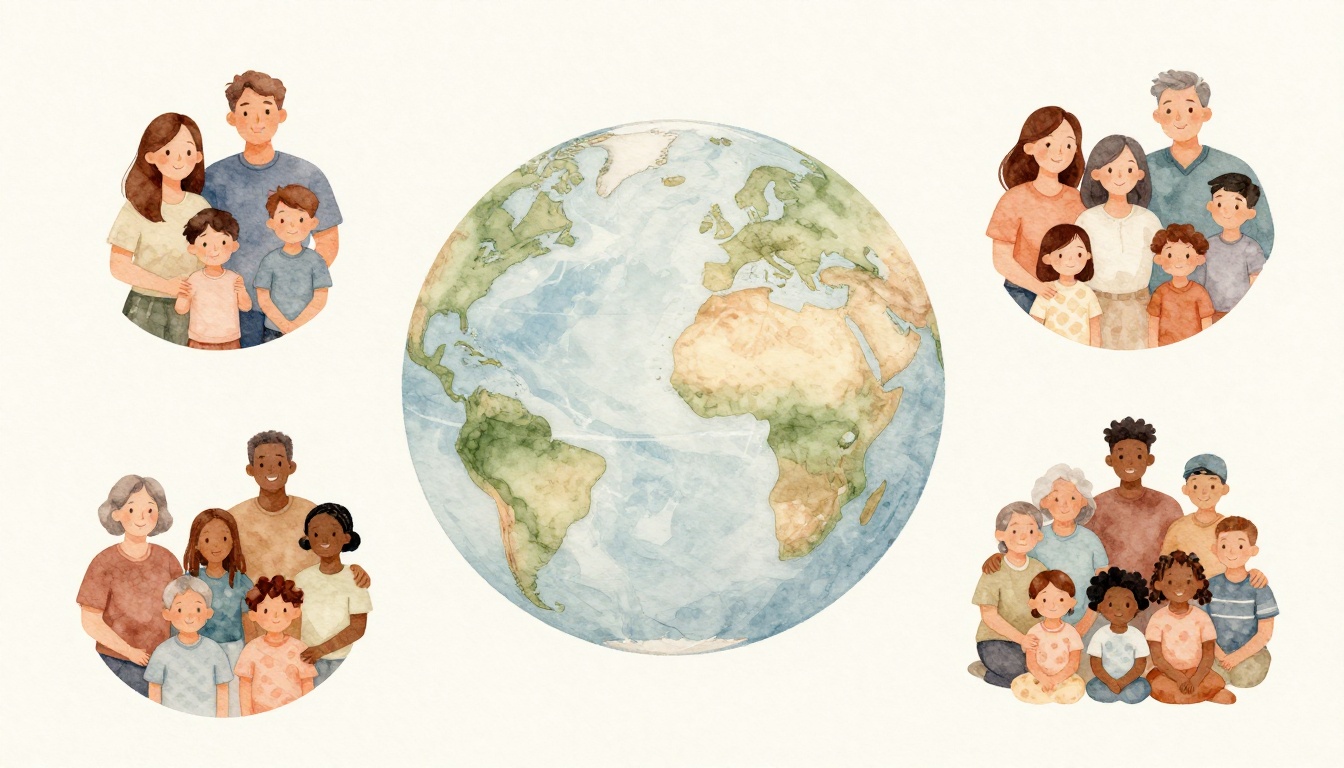
Over 40 percent of kids in Asia, Africa, and Latin America live with extended family members like grandparents or aunts. In contrast, nuclear families dominate in the US and Europe, where most children grow up with just mom, dad, and siblings. These setups shape daily life, support systems, and even how people view independence.
A nuclear family means parents and their kids only. An extended family adds grandparents, uncles, or cousins who pitch in. Joint families take it further; multiple generations share one home and pool resources. You see these differences because culture, money, and history play big roles. They matter for travelers who visit relatives abroad or anyone curious about global ties.
What makes family structures vary so much worldwide? Next, we look at nuclear setups in the West. Then we cover extended ones elsewhere, sizes, and fresh trends.
Nuclear Families: The Go-To Setup in Europe and North America
Parents and kids form the core here. No grandparents or aunts live under the same roof in most cases. This model fits busy lives and smaller homes. About 69 percent of US kids live with two parents. The UK sees 67 percent. Europe ranges from 76 to 89 percent in two-parent homes.
People choose this for privacy and focus on child activities. However, it brings less built-in help with babysitting. Single-parent homes hit 31 percent in the US, the highest rate worldwide. Cohabitation rises too; couples live together without marriage.
Key Stats and Daily Life in the US and UK
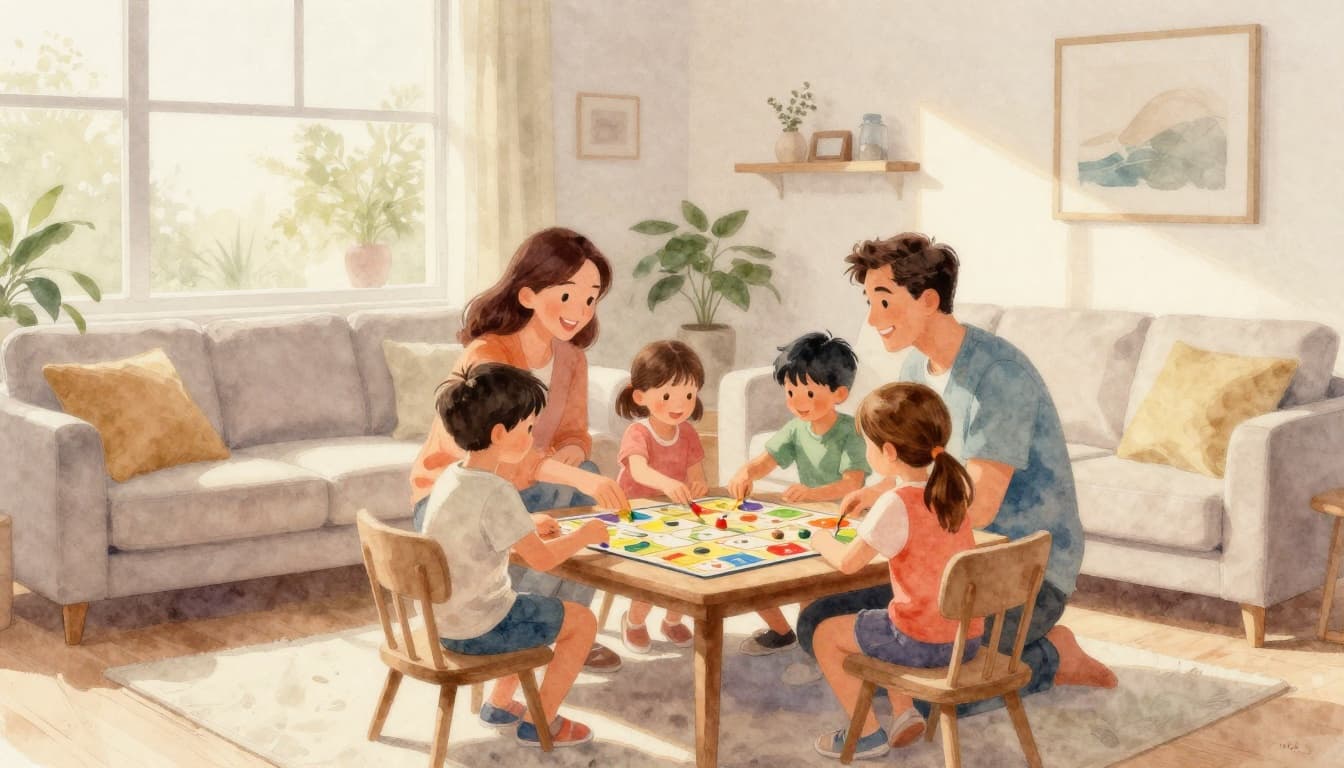
In the US, average household size sits at 2.49 people. The UK clocks in at 2.27. Kids often share rooms in compact houses. Parents shuttle them to soccer or dance after school. Dinner means quick meals around a small table.
For example, a typical US family wakes at 7 a.m. Dad brews coffee. Mom packs lunches. Kids catch the bus. Evenings bring homework and family game night. Stats show nuclear family benefits like higher cognitive scores for kids. Yet single parents juggle more alone.
The UK mirrors this. Two parents raise 67 percent of children. Days fill with school runs and weekend parks. Smaller sizes mean more independence early on.
Europe’s Twist: More Living Together Without Marriage
Italy leads cohabitation trends. Couples skip the ring but raise kids together. This counts as two-parent homes. France and Germany follow with household sizes around 2.05 to 2.40.
Traditional marriage dips because folks delay it for careers. Still, nuclear stays king. Benefits include flexible moves for jobs. Challenges hit when illness strikes without nearby kin. In short, Europe blends choice with small units.
Extended and Joint Families: Building Strength Across Asia, Africa, Latin America, and the Middle East
Grandparents, aunts, and cousins join in. They share chores, meals, and wisdom. Joint families mean all generations under one roof. This builds tight bonds and cuts costs. In India and Jordan, 93 to 94 percent of kids live with two parents, often extended.
Asia shines here. India’s households average 4.38 people. Pakistan reaches 6.80. Africa’s spots like Gambia top 8.70. Nigeria hovers at 4.0. Latin America’s Mexico holds 3.75, with 45 percent of kids in extended setups. Middle East families often exceed 4 to 6.
Shared childcare frees parents for work. Elders pass down stories. Space squeezes happen, though. Privacy takes a back seat.
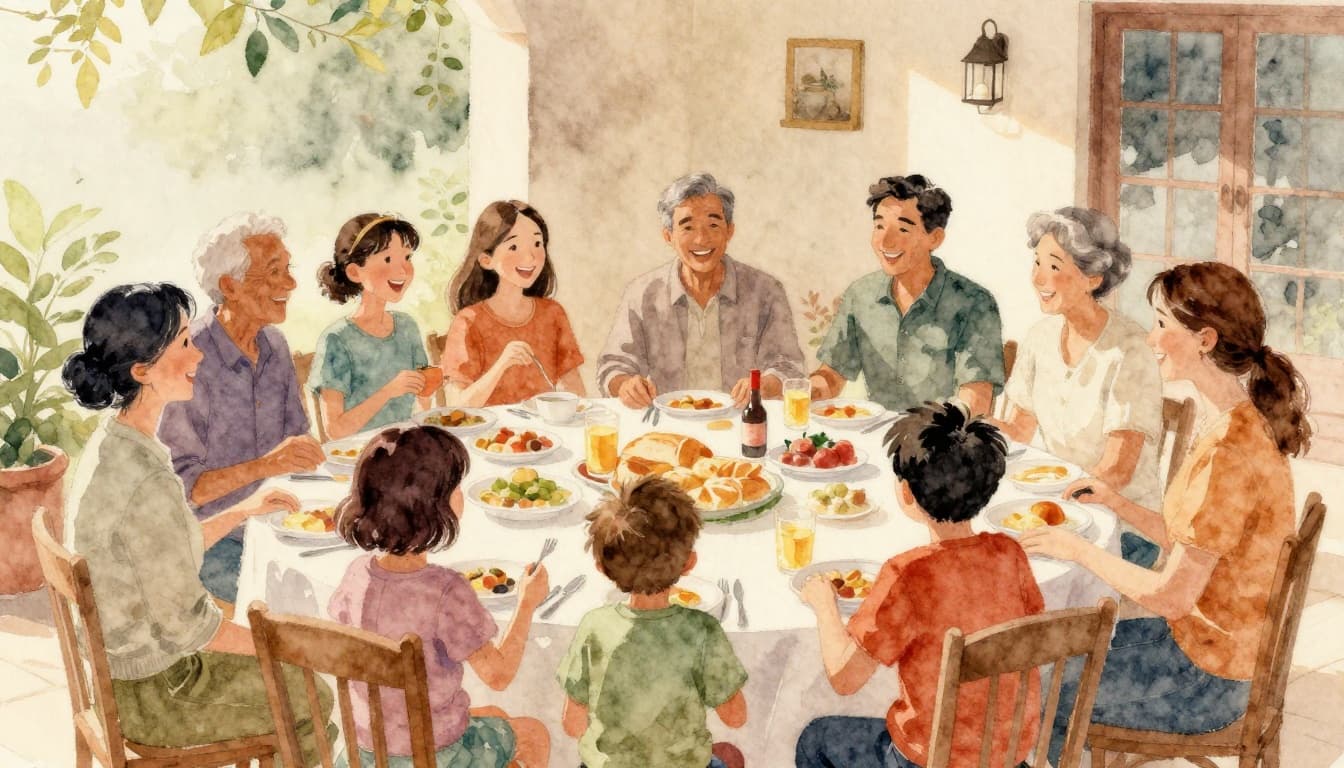
Over 40 percent of children in these regions live with kin beyond parents. That beats the US 29 percent. Global household data shows these patterns.
Joint Families Thriving in South Asia
India’s culture honors elders. Sons bring brides home. Households often hold 5 to 9. Pakistan mirrors this at 6.80 average. Meals cook in big pots. Kids learn from grandma’s lap.
Respect rules. Elders advise on marriages. Money pools for big buys like homes. This setup weathers job loss better.
Africa’s Extended Kin and Matrilineal Roots
Gambia leads with 8.70 per home. Nigeria follows at nearly 4.0. Ghana sits at 3.37. Fostering sends kids to aunts for school. Matrilineal Akan trace lines through moms.
Two-parent rates lag at 56 to 77 percent. Kin step up. Big homes mean lively noise and support nets.
Latin America and Middle East Blends
Mexico sees 45 percent kids with extended family. Cohabitation mixes in. Middle East holds 94 percent two-parent in Jordan, sizes 4 to 6 plus. Shared values stress hospitality. Families celebrate feasts together.
Family Sizes: A Global Snapshot of How Many Live Together
Picture four in a cozy US home. Now imagine 12 squeezed in Gambia. Sizes tell the story. Economics drive small ones; culture keeps others large.
Here’s a quick view from recent data:
| Region/Country | Average Household Size | Notes |
|---|---|---|
| US | 2.49 | Mostly nuclear |
| UK | 2.27 | Small and independent |
| Europe | 2.0-2.4 | Cohabitation common |
| India | 4.38 | Joint families |
| Pakistan | 6.80 | Multi-generational |
| Gambia | 8.70 | Largest worldwide |
| Mexico | 3.75 | Extended often |
Global average nears 3.45. Household counts confirm trends. Africa tops lists. West stays under 3. This affects everything from food budgets to play space.
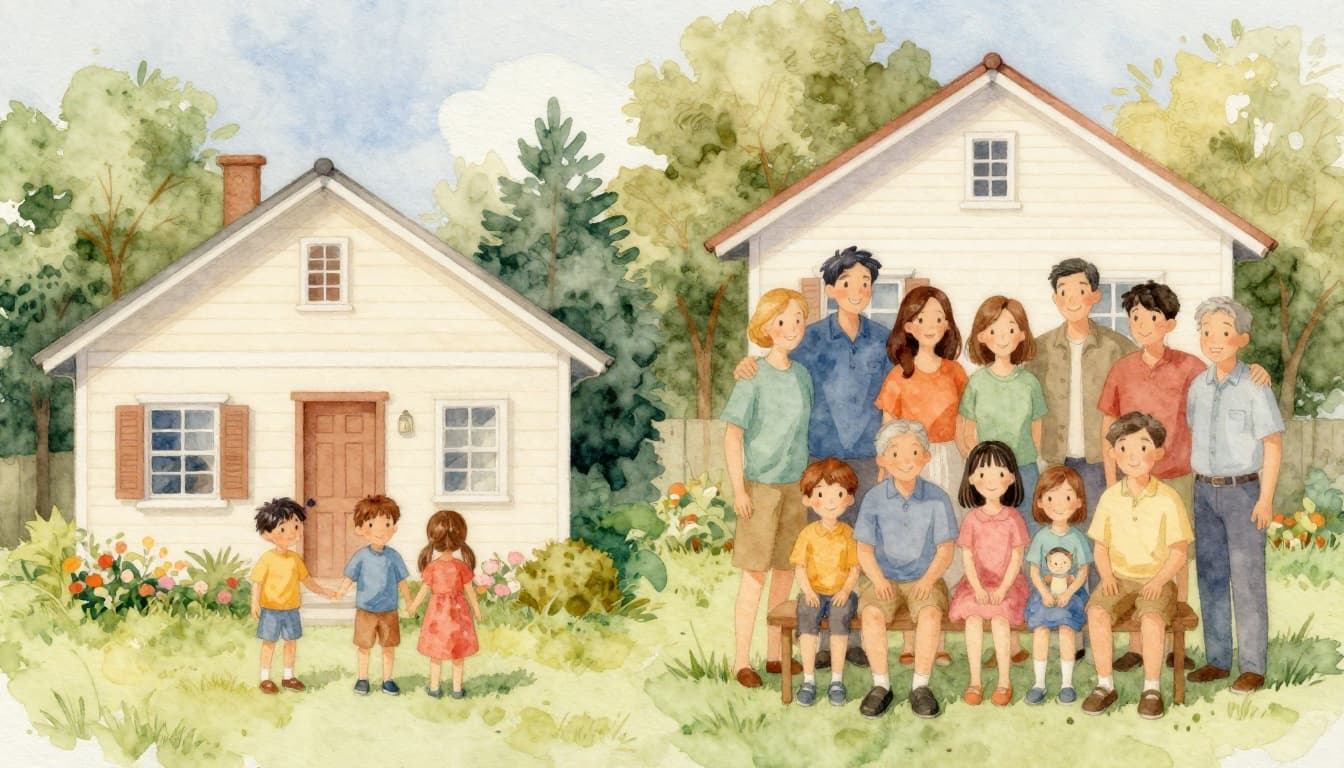
Smaller means more freedom. Larger offers backup.
Shifts Happening Now: Trends Changing Families Everywhere
Families shrink globally. Birth rates drop below 2.1 kids in most spots. A 65-year-old woman had 41 relatives in 1950. Now it’s 25. By 2030, expect fewer cousins.
Asia and Africa see nuclear rise. Extended drops. West leads single lives and cohabitation. Family stats track these changes. Later marriages add to it.
Africa clings to extended most. US life expectancy hits 82.3 soon. Aging means more grandparents alone. Freedom grows, but loneliness worries some.
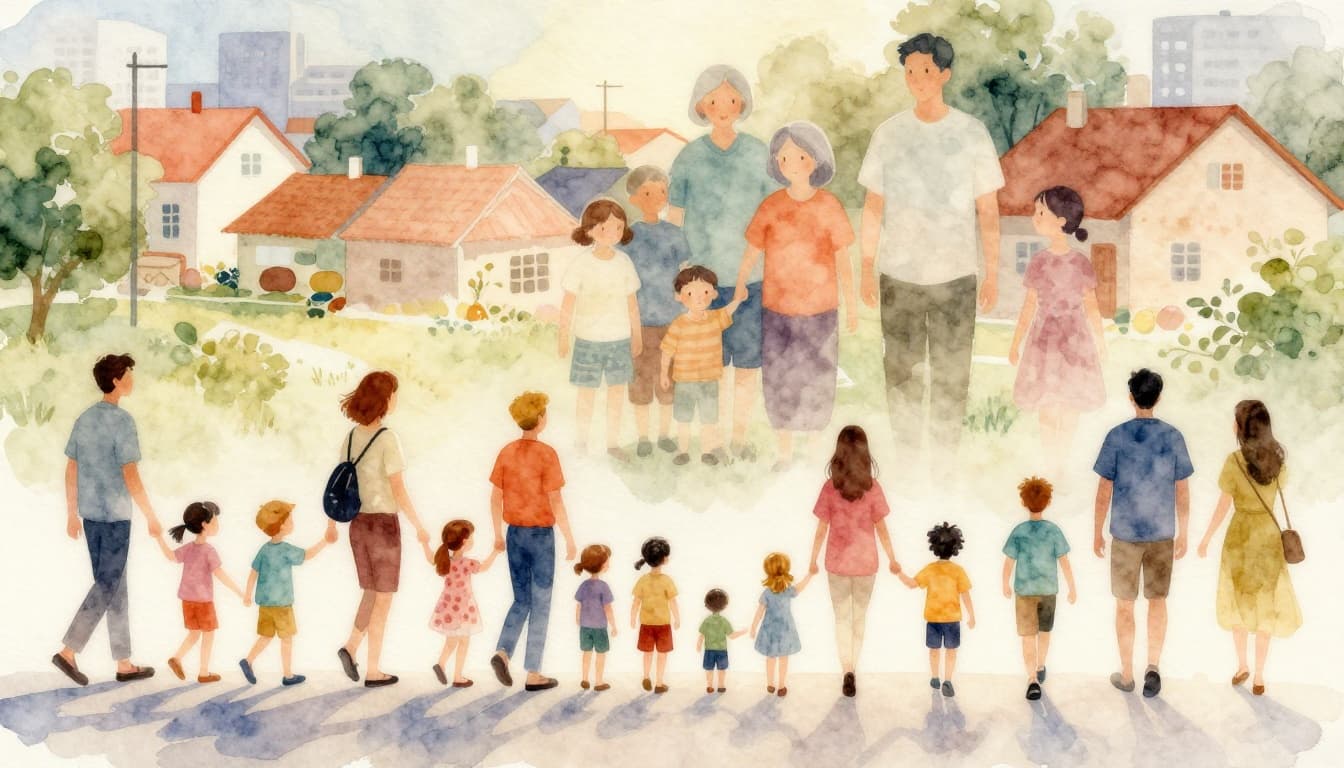
Globalization pulls setups closer. Yet roots hold strong.
Families differ: nuclear rules West with 2.5-ish sizes and two parents for most kids. Extended thrives elsewhere, over 40 percent kids with kin, households 4 to 8 plus. Trends point smaller everywhere.
Diversity enriches us. It teaches resilience and care. Share your family story in comments. How does yours fit these patterns?